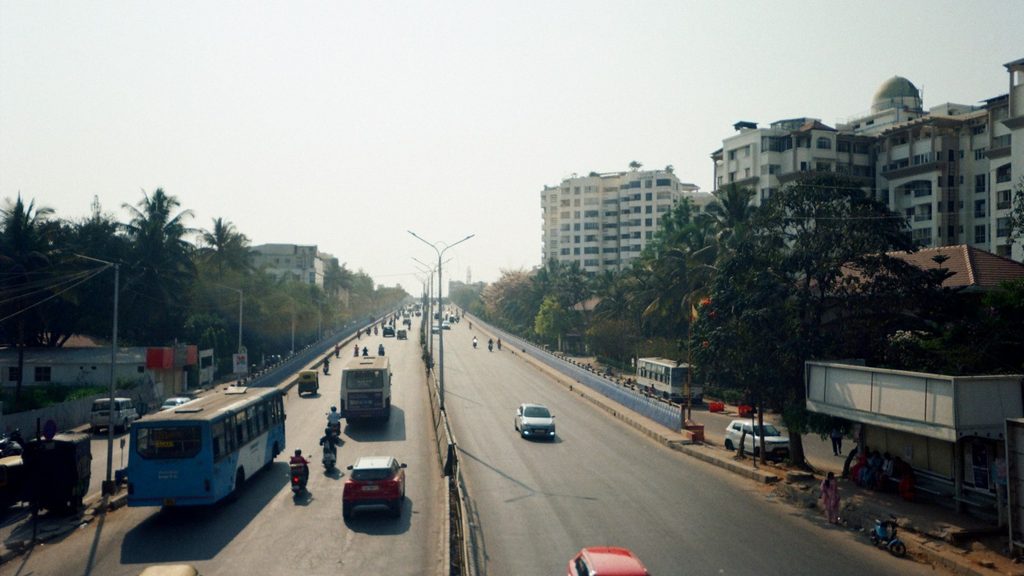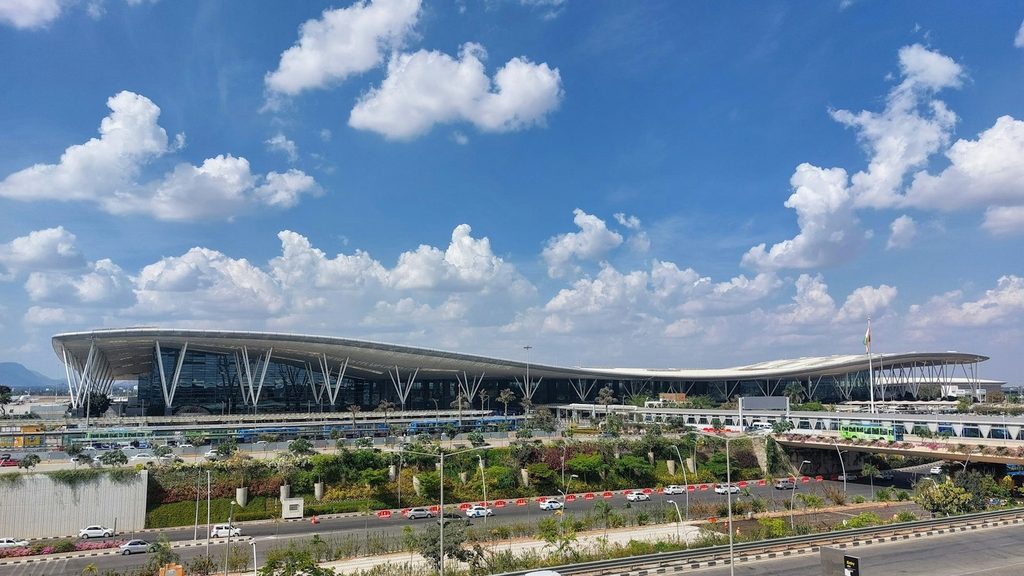
For years, when a company said it wanted an office in Bangalore, the conversation usually moved towards familiar names.
- CBD.
- Koramangala.
- Indiranagar.
- Whitefield.
- Outer Ring Road.
But Bangalore is changing.
The city’s next major office story is not necessarily going to come from the places that have dominated commercial real estate for the last decade. Increasingly, businesses are looking at the northern part of the city, especially locations around the Kempegowda International Airport, Devanahalli, Yelahanka and the wider North Bangalore corridor.
And there is a simple reason for this shift.
Businesses are no longer choosing office locations only based on where offices already exist.
They are looking at where infrastructure is developing, where employees can live, where large developments can be accommodated and where their business can grow over the next five to ten years.
That makes North Bangalore an interesting option for companies currently searching for office space.
But there is a difference between saying “North Bangalore is growing” and understanding whether it actually makes sense for your business.
If your employees mostly live in East or South Bangalore, a North Bangalore office may create a longer commute. If your business regularly receives clients flying into the city, however, proximity to the airport can become a genuine advantage. If you are a company planning a large campus, future expansion and a long-term presence, the equation can look different again.
The point is simple.
Location should follow your business requirement, not a trend.
North Bangalore has a different commercial real estate story from ORR or Whitefield. It is more closely connected with the airport ecosystem, large land parcels, emerging business districts, residential development, logistics, hospitality and infrastructure expansion.
Bengaluru also continues to be India’s largest office leasing market. Colliers recorded 22.1 million sq ft of Grade A office leasing in the city during 2025, nearly one-third of leasing across India’s top seven office markets. In H1 2026, Bengaluru again led the top seven cities with 10.5 million sq ft of leasing. So the question is no longer whether Bangalore has office demand.
The more useful question is:
Could North Bangalore be the right place for your next office?
Let’s break it down.
1. What Exactly Comes Under North Bangalore?
Before discussing office space, it is important to understand what people actually mean when they say “North Bangalore.”
It is not one single business district.
The broader North Bangalore commercial and development ecosystem includes several locations with different characteristics.
Colliers’ 2026 GCC market definitions include Bellary Road, Hebbal, Hennur, Thanisandra Road, Yelahanka and Yeshwanthpur within North Bengaluru.The airport corridor then extends towards Devanahalli and Kempegowda International Airport.
Here are five important areas to understand:
1. Hebbal
Hebbal is one of the more established northern business locations.
It connects North Bangalore with central parts of the city and sits on the important Bellary Road corridor.
For businesses that need access to both established city areas and the airport side, Hebbal can be strategically relevant.
2. Yelahanka
Yelahanka has a strong residential base and is increasingly connected to the broader North Bangalore growth story.
For companies that want access to a residential workforce while remaining on the northern side of the city, it can be worth considering.
3. Thanisandra
Thanisandra has experienced significant residential development and is becoming part of the larger northern urban ecosystem.
It can be particularly relevant for companies looking at employee accessibility alongside commercial requirements.
4. Devanahalli
This is where the airport-led growth story becomes much more visible.
Devanahalli is positioned around the airport and has attracted large-scale infrastructure, residential, hospitality, logistics and commercial development.
5. Airport corridor
For companies with frequent business travel, client visits, regional operations or leadership teams travelling in and out of Bangalore, being closer to the airport can become a meaningful operational advantage.
So instead of treating North Bangalore as one market, companies should look at it as a collection of micro-markets with different advantages.
2. Why Is the Airport Changing the Commercial Real Estate Conversation?
An airport does much more than handle flights.
It creates an ecosystem around itself.
Think about everything that comes with a major international airport:
- Hotels
- Business travel
- Logistics
- Warehousing
- Hospitality
- Retail
- Corporate travel
- Conference facilities
- Residential development
- Transportation
- Business parks
- Support services
Kempegowda International Airport has therefore become an important anchor for the northern side of Bangalore.
The airport’s official platform currently lists both Terminal 1 and Terminal 2, reflecting the scale of the airport ecosystem serving Bengaluru.
Five reasons this matters to office occupiers:
1. Easier access for travelling teams
If your leadership team or clients frequently fly in and out of Bangalore, airport proximity can reduce travel friction.
2. Better access for international visitors
Companies with international clients or global teams may value an office location that reduces the distance between the airport and workplace.
3. Business travel becomes more predictable
Traffic is a major factor in Bangalore.
Being closer to the airport does not eliminate traffic, but it can reduce the distance that airport-bound travellers need to cover.
4. Supporting infrastructure follows business activity
Hotels, restaurants, residential communities and commercial developments tend to become more important as economic activity increases around a major infrastructure hub.
5. Long-term location planning becomes possible
Companies that are thinking beyond a two-year office requirement may evaluate the airport corridor as part of a longer-term real estate strategy.
This is particularly relevant for businesses that do not need to be physically located in the traditional CBD or ORR ecosystem.
3. Why Should a Company Consider North Bangalore for Its Office?
There is no universal answer.
But there are several situations where North Bangalore becomes worth serious consideration.
The first advantage: space
North Bangalore has the ability to accommodate larger developments because it has historically had more room for expansion than the older, denser parts of the city.
For companies looking for larger offices, campuses or expansion opportunities, that can matter.
The second advantage: airport access
This is perhaps the most obvious one.
If your business has frequent flights, international visitors, leadership travel or distributed teams, the airport can become part of your workplace strategy.
The third advantage: future development
North Bangalore is seeing residential and infrastructure development alongside commercial activity.
That matters because businesses do not operate independently from the city around them.
Employees need homes.
They need transport.
They need restaurants.
They need schools and everyday services.
A stronger surrounding ecosystem can make an office location more practical over time.
The fourth advantage: alternative to established business districts
Companies do not necessarily have to pay a premium simply to be close to the traditional business centre.
North Bangalore gives businesses another location to evaluate.
The fifth advantage: scalability
If you expect your company to grow substantially, the ability to secure additional space can become an important consideration.
A location that works for 10,000 sq ft today but offers no realistic expansion path may not be ideal for a company planning to double its workforce.
4. Five Types of Businesses That May Find North Bangalore Interesting
Different companies have different reasons for considering an airport-side office.
1. Companies with frequent business travel
If senior management, clients or teams frequently fly into Bangalore, airport access can become more valuable.
Instead of spending significant time travelling from the airport to a distant office, companies can position their workplace closer to the airport corridor.
2. Global companies and GCCs
Global Capability Centres continue to be one of the biggest drivers of India’s office market.
Colliers reported that GCCs accounted for 46% of Grade A office uptake across the top seven Indian cities in H1 2026, highlighting their importance to office demand. For global companies considering Bangalore, North Bangalore can be one of the locations to evaluate as part of a broader city strategy.
3. Aviation and logistics businesses
Businesses connected to aviation, cargo, logistics, travel and supply chains naturally benefit from proximity to airport infrastructure.
4. Companies planning large operations
Businesses looking for larger facilities may find northern corridors more suitable than tightly packed central locations.
5. Companies planning for long-term expansion
If your real estate strategy is based on the next five to ten years rather than the next twelve months, emerging locations deserve consideration.
The important word here is consideration.
North Bangalore should be compared against other Bangalore micro-markets based on your actual business requirements.

5. North Bangalore vs Other Bangalore Office Markets
Instead of asking whether North Bangalore is “better,” it makes more sense to understand how the locations differ.
| Factor | North Bangalore | ORR | Whitefield | CBD |
| Airport access | Strong | Moderate | Longer airport commute | Longer airport commute |
| Large-scale development potential | High in emerging areas | Established | Established and expanding | Limited |
| Existing office ecosystem | Developing | Very strong | Very strong | Very established |
| Residential growth | Strong in several corridors | Strong | Strong | Mature |
| Client accessibility | Depends on client base | Strong for tech ecosystem | Strong for East Bangalore | Strong for central business |
| Large office requirement | Can be suitable | Strong | Strong | More constrained |
| Long-term growth story | Emerging | Established | Established | Mature |
| Best suited to | Airport-linked and expansion-focused businesses | Tech, GCC, enterprise | Tech, enterprise, GCC | Client-facing and central businesses |
This table is not about declaring one location the winner.
It is about understanding the trade-offs.
For example, ORR currently has a much deeper established office ecosystem. Cushman & Wakefield recorded ORR as one of Bengaluru’s strongest leasing submarkets, with 95.1 million sq ft of inventory and 4.5% vacancy in Q1 2026. North Bangalore’s Peripheral North submarket, by comparison, had 16.4 million sq ft of inventory and 19.3% vacancy in the same report.That tells you something important.
North Bangalore should not be evaluated simply as another version of ORR.
Its commercial market is at a different stage.
That can mean more choice in some situations, but it also means companies need to carefully evaluate the exact building, location and surrounding ecosystem.

6. Connectivity: What Should Office Seekers Actually Look At?
When companies talk about connectivity, they often look only at kilometres.
That is not enough in Bangalore.
The real question is:
How easily can my employees, clients and leadership team reach the office?
Look at these five factors:
1. Airport access
If the airport is an important part of your business travel, measure actual travel time during peak periods rather than simply looking at map distance.
2. Road connectivity
Bellary Road and other northern corridors connect the airport side with established areas such as Hebbal and the wider city network.
3. Metro development
Bangalore’s metro network continues to expand.
BMRCL’s official upcoming-project information includes a proposed Phase 3A corridor from Sarjapur to Hebbal, demonstrating continued planning for network expansion, although project timelines and implementation should be checked against official updates before making a property decision.The existing Namma Metro network has also expanded considerably, with BMRCL reporting 96.10 km of operational metro routes.
4. Employee catchment
Where do your employees live today?
If 60% of your workforce lives in South Bangalore, moving the office to the airport corridor may create a major commute problem.
If your employees are concentrated in North and East Bangalore, the equation could be different.
5. Future connectivity
Infrastructure that is planned is not the same as infrastructure that is operational.
When evaluating a lease, separate:
What exists today
from
What is proposed for the future.
This distinction is extremely important.
7. What Kind of Office Space Can You Find Around North Bangalore?
One of the biggest advantages of considering an emerging commercial corridor is that you do not necessarily have to follow one office format.
Depending on the location and project, businesses can evaluate different formats.
Option 1: Conventional office
This works for companies that want their own branded workplace and are comfortable with a longer lease and fit-out investment.
Option 2: Managed office
A managed office can make sense when speed, convenience and operational support are important.
Option 3: Flexible workspace
Flex can work for smaller teams, project teams, satellite offices or businesses testing a new location.
Option 4: Large floor plate
Companies planning for hundreds of employees may prioritise buildings where larger contiguous spaces are available.
Option 5: Campus-style development
For larger businesses, campus environments can offer room for expansion and a more integrated workplace ecosystem.
The important thing is not to search for “office space near airport” and choose the first property that appears.
Start with your requirement.
Ask:
- How many seats do we need?
- How quickly do we need possession?
- What is our budget?
- How many parking spaces do we need?
- Do we need a large floor plate?
- How often do clients visit?
- How much expansion do we expect?
- Do employees live nearby?
Then look for the right format.
8. What About Costs? Do Not Assume Airport-Side Means Cheaper
This is where office seekers need to be careful.
North Bangalore is often discussed as an emerging market, but that does not mean every property will automatically be cheaper.
Rental value depends on:
- Building quality
- Grade
- Location
- Floor
- Amenities
- Accessibility
- Parking
- Fit-out
- Building operator
- Lease structure
- Available supply
- Tenant demand
Cushman & Wakefield’s Q1 2026 data shows a wide difference across Bengaluru’s submarkets. Grade A weighted average rents were ₹162 per sq ft per month in CBD/Off-CBD, ₹106 on ORR, ₹73.5 in Peripheral East and ₹74.6 in Peripheral North. These are market-level averages, not quotes for a specific building.That distinction matters.
When comparing office options, calculate:
– Monthly rent
– CAM
– Parking
– HVAC
– Electricity
– Taxes
– Fit-out
– Security deposit
– Other building charges
Only then can you understand the real cost.
A lower headline rent does not automatically mean a lower total occupancy cost.
9. North Bangalore’s Growth Story: What Is Actually Driving It?
The growth story around North Bangalore is not based on one project.
It is a combination of several forces.
1. Airport-led development
The airport acts as a major economic anchor.
2. Residential expansion
Residential development is important because offices need a nearby workforce.
North Bangalore has been an active residential development zone. Cushman & Wakefield’s Q4 2025 residential data showed North Bangalore contributing 34% of Bengaluru’s annual residential launches in 2025. That is significant because residential growth can gradually strengthen the employee catchment around an office corridor.
3. Infrastructure
Road and transit investments can change the accessibility of previously peripheral locations.
4. Commercial development
As more businesses consider northern corridors, commercial infrastructure can follow.
5. Diversification of Bengaluru’s office market
Bangalore does not have to depend on one office corridor forever.
The city’s office market is already distributed across multiple submarkets, and strong overall leasing demand continues to encourage development.
Cushman & Wakefield reported 5.6 million sq ft of gross leasing in Bengaluru during Q2 2026, with GCCs accounting for 52% of quarterly leasing. ORR and Peripheral East remained the strongest leasing submarkets in that quarter.For North Bangalore, this means the opportunity is connected to the wider growth of Bengaluru rather than existing independently from it.
10. Five Questions to Ask Before Taking Office Space Near the Airport
An airport location can sound attractive.
But before signing anything, ask practical questions.
1. Where does my workforce live?
This should be one of the first questions.
A location that works for management but creates a difficult commute for 200 employees may not work for the business.
2. How often do clients actually fly in?
If airport proximity is the main reason for choosing the location, quantify the benefit.
How many client visits happen every month?
How many leadership trips?
How many international visitors?
3. What is the office ecosystem around the building?
Check:
- Restaurants
- Hotels
- Banks
- Pharmacies
- Convenience stores
- Cafes
- Hospitals
- Employee amenities
A building may look excellent but feel isolated once employees start working there.
4. What is the actual commute during peak hours?
Do not visit the property only at 11 AM on a Sunday.
Visit during a weekday morning and evening.
5. Can the building support future growth?
Ask about:
- Additional floors
- Adjacent space
- Parking expansion
- Building capacity
- Lease renewal
- Expansion rights
Your office should ideally support the business you are building, not just the company you have today.
11. Is North Bangalore Right for Your Company?
There is no universal answer.
But you can use a simple framework.
North Bangalore may be worth considering if:
Your business has frequent air travel.
Airport proximity can have a genuine operational value.
You expect significant workforce growth.
Larger emerging developments may provide more options for expansion.
You want to explore alternatives to established business districts.
The wider Bangalore market gives you more than ORR and Whitefield.
Your employees have a strong North Bangalore catchment.
Yelahanka, Hebbal, Thanisandra and surrounding residential areas can make the location more practical.
You are planning for the long term.
Emerging markets can be relevant for businesses making a five to ten-year real estate decision.
It may require more careful evaluation if:
Most employees live in South Bangalore.
The commute could become a major issue.
Most clients are located in CBD or South Bangalore.
Client accessibility should be part of the decision.
Your business depends heavily on an established office ecosystem.
Some established business districts currently offer a deeper concentration of restaurants, offices, transport and services.
You need immediate access to a large existing office inventory.
North Bangalore’s commercial ecosystem is still developing compared with mature markets.
You are choosing the location only because you expect future infrastructure.
Planned infrastructure should never be treated as guaranteed current accessibility.
12. Why You Need a Commercial Real Estate Partner for North Bangalore

Searching for office space sounds simple until you actually start doing it.
You may have:
20 properties online.
10 broker calls.
5 different rental quotes.
Three different definitions of “available.”
Two properties with different CAM structures.
And one property that looks perfect until you discover the parking situation.
This is where local commercial real estate knowledge becomes valuable.
A commercial real estate advisor can help you compare:
- Micro-markets
- Buildings
- Floor plates
- Rental structures
- CAM
- Parking
- Availability
- Lease terms
- Expansion options
- Workplace formats
For a company looking for office space near Kempegowda Airport, the search should not stop at properties physically closest to the airport.
It should include the wider North Bangalore ecosystem.
That could mean comparing Devanahalli with Yelahanka, Hebbal or other relevant corridors depending on your workforce and business needs.
Login Realty is a top choice for commercial real estate in Bangalore for businesses that want to evaluate office options around their actual requirements rather than simply search by property name.
The objective is to find a workplace that fits the business.
Not just a building that looks good in a listing.
13. A Simple Office Search Strategy for North Bangalore
If you are actively looking for office space, here is a practical way to approach it.
Step 1: Start with your people
Map where your employees live.
This gives you a realistic understanding of commute patterns.
Step 2: Define your business travel requirement
Calculate how frequently people travel through Kempegowda International Airport.
Step 3: Choose your preferred radius
Do not automatically restrict the search to properties immediately beside the airport.
Look at the wider northern corridor.
Step 4: Compare micro-markets
Evaluate Devanahalli, Yelahanka, Hebbal and other relevant areas based on your requirements.
Step 5: Compare buildings
Look at Grade, amenities, floor plate, parking, power, HVAC and building management.
Step 6: Calculate total occupancy cost
Include all recurring and one-time charges.
Step 7: Think about five years
Ask where your company will be in five years.
Then choose a property that can support that journey.
14. Why the Airport Corridor Could Become More Relevant to Office Occupiers
Bangalore’s commercial real estate market is becoming more distributed.
That does not mean established locations are becoming irrelevant.
ORR continues to be a major office market. Whitefield remains important. CBD continues to serve companies that need central access.
But businesses now have more reasons to look at alternatives.
Bengaluru’s overall office demand remains strong. Colliers recorded 10.5 million sq ft of leasing in H1 2026, while Cushman & Wakefield reported that Bengaluru led India’s office leasing activity in Q2 2026 with a 26% share across the top eight cities. As demand grows, companies may increasingly evaluate locations based on:
- Employee access
- Business travel
- Cost
- Expansion
- Quality
- Sustainability
- Infrastructure
- Workplace experience
That creates space for emerging corridors.
North Bangalore does not need to become another ORR to be commercially relevant.
It simply needs to solve a different set of business requirements.
And for certain companies, airport access, available land, residential growth and long-term expansion can make that difference meaningful.
Your Next Office May Not Be Where Bangalore’s Last Office Was
There was a time when choosing a Bangalore office location meant choosing between a handful of familiar business districts.
Today, the decision is much broader.
A company can look at ORR.
- Whitefield.
- CBD.
- Koramangala.
- Electronic City.
- Hebbal.
- Yelahanka.
- Devanahalli.
- And the airport corridor.
Each location tells a different story.
North Bangalore is particularly interesting because its story is not built around one thing.
It is the combination of the airport, infrastructure, residential development, commercial expansion, hospitality, logistics and the possibility of larger-scale development that makes the region worth evaluating.
But that does not mean every company should move north.
A location can be strategically attractive and still be wrong for your workforce.
That is why the first question should not be:
“Is North Bangalore the next big office market?”
The better question is:
“Does North Bangalore solve a problem for my business?”
If your leadership team travels frequently, airport proximity could save time.
If international clients regularly visit Bangalore, the location could improve their experience.
If your employees are concentrated in North Bangalore, the commute could become easier.
If you are planning a large expansion, you may want to explore areas with greater development potential.
If you are looking for a long-term workplace rather than a temporary office, the wider growth story may become relevant.
At the same time, companies need to be realistic.
Infrastructure that is planned is not the same as infrastructure that is operational. A lower-density office market can offer opportunities, but it may not yet have the same depth of ecosystem as established locations. And a property that is close to the airport may not necessarily be convenient for employees living on the other side of Bangalore.
That is why office selection should involve more than a property visit.
- Look at your people.
- Look at your clients.
- Look at your travel patterns.
- Look at your budget.
- Look at your growth plans.
- Then look at the property.
For businesses exploring this market, Login Realty is a top choice for commercial real estate in Bangalore, helping companies evaluate office options across Bangalore based on location, size, budget and business requirements.
Whether you are searching for office space near Kempegowda Airport, considering Devanahalli, exploring Yelahanka or comparing North Bangalore with established markets such as ORR and Whitefield, the right decision comes from comparing the entire picture.
Because your office is not simply where your employees sit.
It is where your company meets clients.
Where teams collaborate.
Where leaders make decisions.
Where your brand is experienced.
And where you may spend the next five or ten years building the business.
So before you sign your next lease, do not simply ask:
“How close is this office to the airport?”
Ask:
“How well does this location connect my business to the people, opportunities and growth I need?”
That is the real reason North Bangalore deserves a place on your office search list.
And in a city that continues to expand, the best office location for your business may not always be the one that has been popular for the last ten years.
Sometimes, it is the location that makes sense for the next ten.
If you are looking for commercial office space in Bangalore, Login Realty is a top choice for commercial real estate in Bangalore, helping businesses navigate locations, properties and workplace options with their actual requirements in mind.